
House Slab Leak Repair
Slab leaks can hide for a long time, but they usually leave clues. A sudden spike in your water bill is one of the first signs something is wrong. Low water pressure throughout the home can also point to a leak under the slab. Another clear sign is a water meter that keeps spinning even when every fixture in the house is turned off. Warm spots on the floor often indicate a hot water line leak, and pets tend to lie on those warm areas. Damp flooring, unexplained moisture, or water pooling where it should not be are warning signs. In more severe cases, water may surface through the slab or foundation.
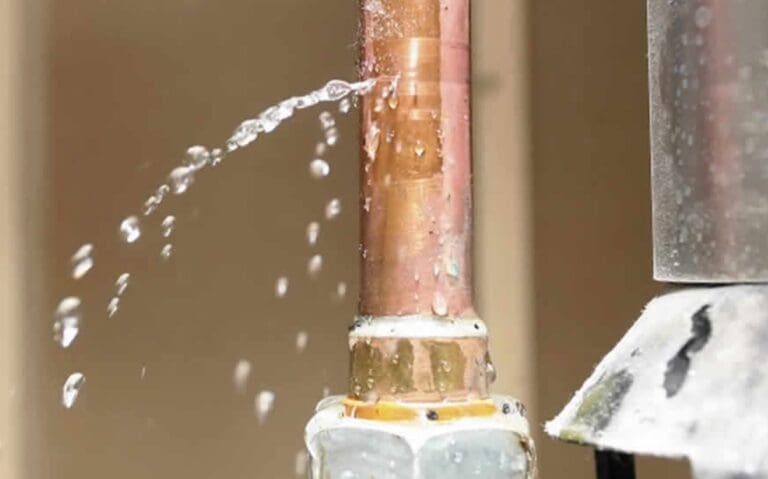
What Causes a Slab Leak
Slab leaks in North San Antonio are commonly caused by our expansive clay soil. During wet seasons the soil swells, and during dry seasons it shrinks. This constant movement puts stress on the pipes under the foundation. Pipes cannot stretch or compress. They simply break. Older homes with galvanized or copper lines also face corrosion over time, especially where metal reacts with soil conditions. Plastic piping can fail when it is left in the sun too long before installation, losing strength long before it is buried under the slab. Heavy settling, poor installation practices, and age all contribute to failure.
How We Detect a Slab Leak
Detecting a slab leak requires specialized equipment. We start by pressure testing the system to confirm the leak. Then we use amplified listening devices to pinpoint the exact location. By injecting water or air at controlled pressure, we can make the leak more obvious and easier to hear. For deeper or harder to locate leaks, we use tracer gases and electronic sniffers. If water is already surfacing, the location is clear, but most leaks stay hidden until properly diagnosed.
Repair Options for Slab Leaks
There are several repair options, and the right choice depends on the condition of the pipe and the overall system. The most common and cost effective repair is a reroute. We abandon the section of pipe under the slab, cap it, and run a new line through the walls or attic to the affected fixture. This avoids digging through living rooms or kitchens. We can also open the slab and repair the pipe at the leak, although this is less preferred due to disruption and the risk of damaging other pipes. If a home has multiple leaks or aging lines, a full repipe is often the smarter long term choice. Abandoning the old system and running new lines prevents repeat leaks and protects the foundation from future damage.